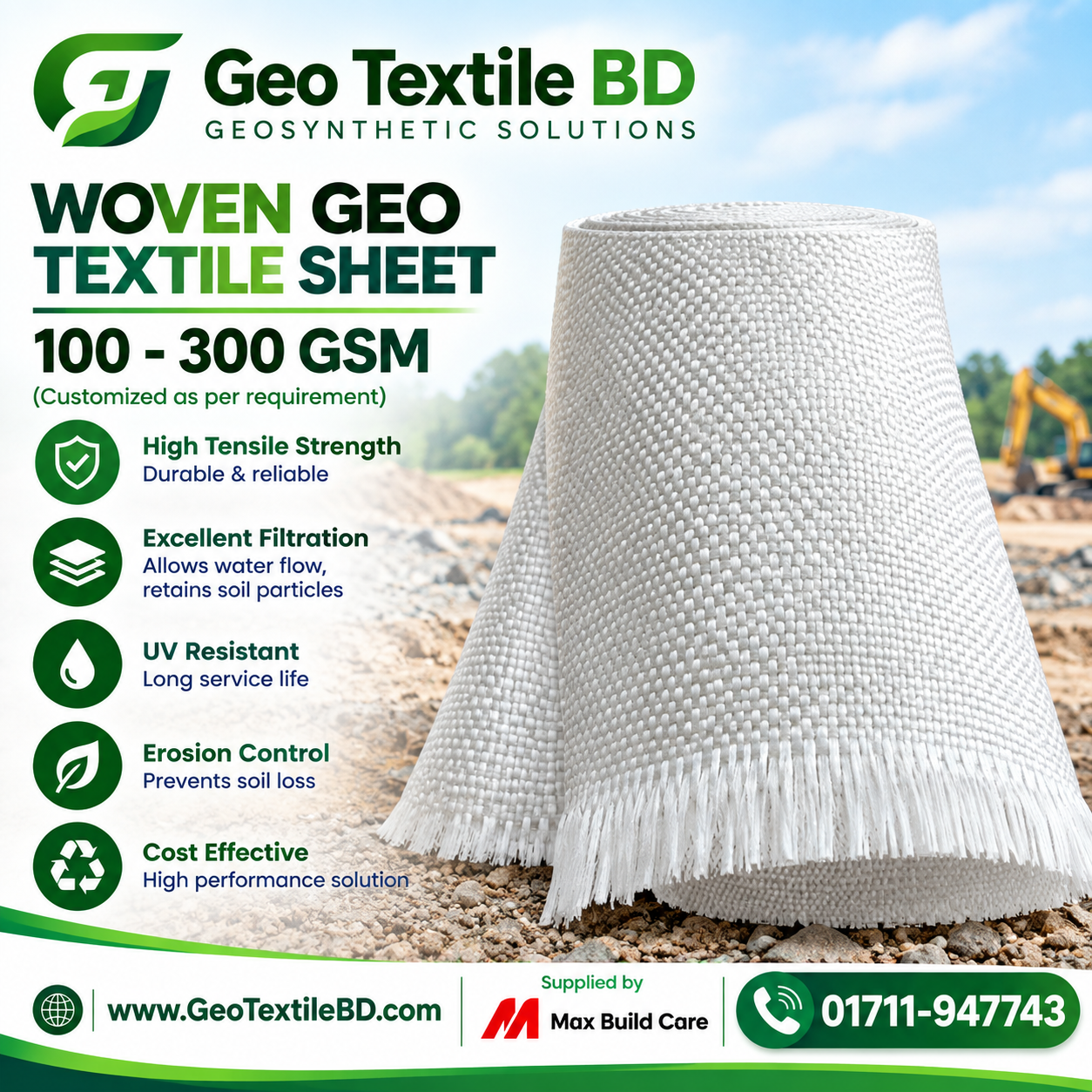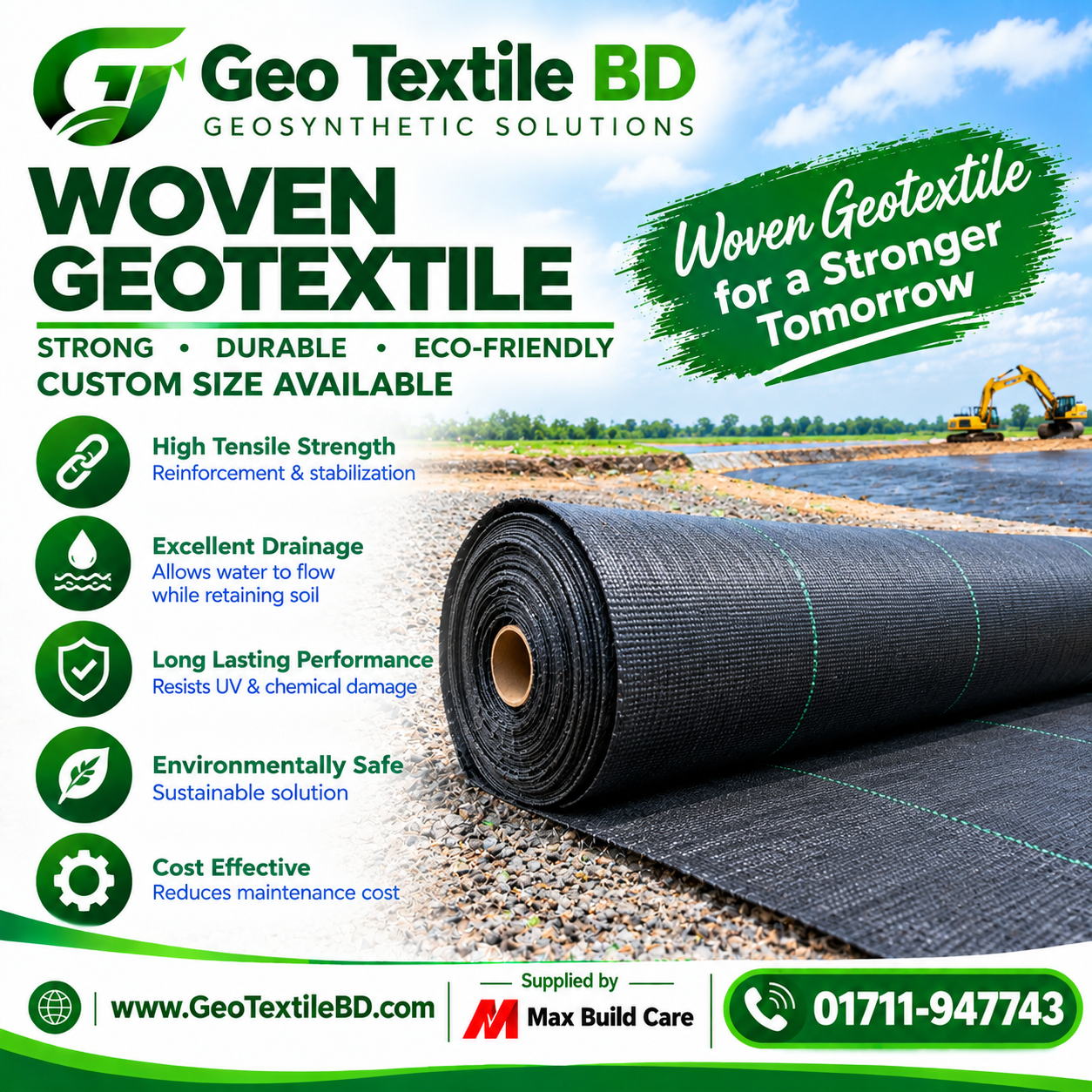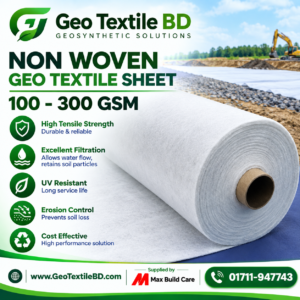
Woven Geotextile Sheet is a high-strength synthetic geotextile designed for soil stabilization, separation, reinforcement, and drainage applications. Manufactured from durable polymer yarns, it helps improve ground stability, reduce soil deformation, and enhance the performance of roads, embankments, foundations, and infrastructure projects.
Woven Geotextile Sheet is a high-strength synthetic geosynthetic material manufactured by weaving polymeric yarns into a stable and durable fabric structure. It is widely used in civil engineering, road construction, soil stabilization, ground improvement, reinforcement, separation, and erosion-control applications.
Designed to provide high tensile strength and dimensional stability, woven geotextiles help improve the performance of weak or unstable soil conditions. They are particularly useful where conventional soil improvement methods may require large quantities of aggregate, additional excavation, or extensive construction work.
Woven Geotextile is a manufactured geosynthetic fabric produced by systematically interlacing synthetic polymer yarns. The controlled weaving process creates a strong and uniform sheet with specific tensile strength, elongation, permeability, and dimensional characteristics.
Unlike non-woven geotextiles, which are generally manufactured using randomly arranged fibers, woven geotextiles have an organized yarn structure that provides excellent tensile strength. This makes them particularly suitable for reinforcement and stabilization applications where the geotextile needs to withstand significant tensile forces.
Depending on the product specification, woven geotextiles may be manufactured from materials such as polypropylene (PP) or polyethylene (PE).
Woven Geotextile Sheet is designed to withstand significant tensile forces, making it suitable for reinforcing weak soils and improving the structural performance of pavement and ground systems.
When installed between soil layers or beneath aggregate, woven geotextile can help distribute loads more effectively and reduce deformation of weak subgrade materials.
The geotextile helps prevent the mixing of different soil or aggregate layers. This maintains the integrity of the designed pavement or foundation structure.
By reinforcing and stabilizing the soil structure, woven geotextiles can help improve the load-bearing performance and serviceability of roads, embankments, and other civil engineering works.
Manufactured from synthetic polymers, woven geotextiles offer good resistance to moisture and many common environmental conditions. Their durability makes them suitable for long-term civil engineering applications when the correct grade is selected.
The sheet is supplied in rolls that can be transported, positioned, cut, overlapped, and installed efficiently at construction sites.
Woven Geotextile Sheet is commonly used in:
It is especially beneficial for projects constructed over soft, weak, saturated, or unstable soil.
One of the most common applications of woven geotextile is road construction. When placed between the weak subgrade and aggregate layer, the geotextile helps separate the materials and provides reinforcement.
It can reduce the upward migration of fine soil particles into the aggregate layer while helping distribute applied loads over a wider area. This can contribute to improved pavement performance and reduced rutting or deformation, depending on the design and soil conditions.
Before installation, the construction area should be prepared by removing sharp objects, large debris, and unsuitable materials that could damage the geotextile.
The woven geotextile roll is then placed over the prepared ground. Sheets should be properly aligned and overlapped according to the project design and installation requirements.
Where required, the geotextile can be temporarily secured using suitable pins, staples, or other fixing methods to prevent movement during aggregate placement.
Aggregate or fill material should be placed carefully to avoid damaging the fabric. Heavy equipment should not be operated directly on exposed geotextile unless specifically permitted by the project specification.
The exact overlap width, anchoring method, installation direction, and aggregate thickness should be determined according to site conditions and the project engineer’s design.
Selecting the correct woven geotextile is essential for achieving the desired performance. Important technical parameters may include:
The appropriate specification should be selected according to soil conditions, traffic loading, aggregate characteristics, drainage requirements, and project design.
Woven Geotextile rolls should be stored in a clean, dry, and protected area. Rolls should preferably remain covered and protected from prolonged exposure to direct sunlight before installation.
During transportation and installation, care should be taken to avoid puncturing, tearing, or mechanically damaging the fabric.
MAX BUILD CARE supplies Woven Geotextile Sheets for road construction, soil stabilization, embankment, foundation, drainage, land reclamation, and other civil engineering projects across Bangladesh.
Different grades, tensile strengths, roll sizes, and specifications can be supplied according to project requirements.
For bulk or project-based requirements, customers can provide the required tensile strength, GSM, roll size, quantity, and application details to obtain a suitable product specification and quotation.
Woven Geotextile Sheet is a reliable and versatile geosynthetic solution for soil stabilization, reinforcement, separation, and ground improvement. Its high tensile strength, durable woven structure, easy handling, and wide range of applications make it an important material for modern civil engineering and infrastructure development.
When correctly selected and installed, woven geotextile can help improve soil stability, reduce material intermixing, enhance load distribution, and support the long-term performance of roads, embankments, foundations, and other infrastructure systems.

Woven Geotextile Sheet is a high-strength synthetic geotextile designed for soil stabilization, separation, reinforcement, and drainage applications. Manufactured from durable polymer yarns, it helps improve ground stability, reduce soil deformation, and enhance the performance of roads, embankments, foundations, and infrastructure projects.
Woven Geotextile Sheet is a high-strength synthetic geosynthetic material manufactured by weaving polymeric yarns into a stable and durable fabric structure. It is widely used in civil engineering, road construction, soil stabilization, ground improvement, reinforcement, separation, and erosion-control applications.
Designed to provide high tensile strength and dimensional stability, woven geotextiles help improve the performance of weak or unstable soil conditions. They are particularly useful where conventional soil improvement methods may require large quantities of aggregate, additional excavation, or extensive construction work.
Woven Geotextile is a manufactured geosynthetic fabric produced by systematically interlacing synthetic polymer yarns. The controlled weaving process creates a strong and uniform sheet with specific tensile strength, elongation, permeability, and dimensional characteristics.
Unlike non-woven geotextiles, which are generally manufactured using randomly arranged fibers, woven geotextiles have an organized yarn structure that provides excellent tensile strength. This makes them particularly suitable for reinforcement and stabilization applications where the geotextile needs to withstand significant tensile forces.
Depending on the product specification, woven geotextiles may be manufactured from materials such as polypropylene (PP) or polyethylene (PE).
Woven Geotextile Sheet is designed to withstand significant tensile forces, making it suitable for reinforcing weak soils and improving the structural performance of pavement and ground systems.
When installed between soil layers or beneath aggregate, woven geotextile can help distribute loads more effectively and reduce deformation of weak subgrade materials.
The geotextile helps prevent the mixing of different soil or aggregate layers. This maintains the integrity of the designed pavement or foundation structure.
By reinforcing and stabilizing the soil structure, woven geotextiles can help improve the load-bearing performance and serviceability of roads, embankments, and other civil engineering works.
Manufactured from synthetic polymers, woven geotextiles offer good resistance to moisture and many common environmental conditions. Their durability makes them suitable for long-term civil engineering applications when the correct grade is selected.
The sheet is supplied in rolls that can be transported, positioned, cut, overlapped, and installed efficiently at construction sites.
Woven Geotextile Sheet is commonly used in:
It is especially beneficial for projects constructed over soft, weak, saturated, or unstable soil.
One of the most common applications of woven geotextile is road construction. When placed between the weak subgrade and aggregate layer, the geotextile helps separate the materials and provides reinforcement.
It can reduce the upward migration of fine soil particles into the aggregate layer while helping distribute applied loads over a wider area. This can contribute to improved pavement performance and reduced rutting or deformation, depending on the design and soil conditions.
Before installation, the construction area should be prepared by removing sharp objects, large debris, and unsuitable materials that could damage the geotextile.
The woven geotextile roll is then placed over the prepared ground. Sheets should be properly aligned and overlapped according to the project design and installation requirements.
Where required, the geotextile can be temporarily secured using suitable pins, staples, or other fixing methods to prevent movement during aggregate placement.
Aggregate or fill material should be placed carefully to avoid damaging the fabric. Heavy equipment should not be operated directly on exposed geotextile unless specifically permitted by the project specification.
The exact overlap width, anchoring method, installation direction, and aggregate thickness should be determined according to site conditions and the project engineer’s design.
Selecting the correct woven geotextile is essential for achieving the desired performance. Important technical parameters may include:
The appropriate specification should be selected according to soil conditions, traffic loading, aggregate characteristics, drainage requirements, and project design.
Woven Geotextile rolls should be stored in a clean, dry, and protected area. Rolls should preferably remain covered and protected from prolonged exposure to direct sunlight before installation.
During transportation and installation, care should be taken to avoid puncturing, tearing, or mechanically damaging the fabric.
MAX BUILD CARE supplies Woven Geotextile Sheets for road construction, soil stabilization, embankment, foundation, drainage, land reclamation, and other civil engineering projects across Bangladesh.
Different grades, tensile strengths, roll sizes, and specifications can be supplied according to project requirements.
For bulk or project-based requirements, customers can provide the required tensile strength, GSM, roll size, quantity, and application details to obtain a suitable product specification and quotation.
Woven Geotextile Sheet is a reliable and versatile geosynthetic solution for soil stabilization, reinforcement, separation, and ground improvement. Its high tensile strength, durable woven structure, easy handling, and wide range of applications make it an important material for modern civil engineering and infrastructure development.
When correctly selected and installed, woven geotextile can help improve soil stability, reduce material intermixing, enhance load distribution, and support the long-term performance of roads, embankments, foundations, and other infrastructure systems.
Lorem ipsum dolor sit amet, consectetur adipiscing elit. Ut elit tellus, luctus nec ullamcorper mattis, pulvinar dapibus leo.
Lorem ipsum dolor sit amet, consectetur adipiscing elit. Ut elit tellus, luctus nec ullamcorper mattis, pulvinar dapibus leo.
Lorem ipsum dolor sit amet, consectetur adipiscing elit. Ut elit tellus, luctus nec ullamcorper mattis, pulvinar dapibus leo.
Lorem ipsum dolor sit amet, consectetur adipiscing elit. Ut