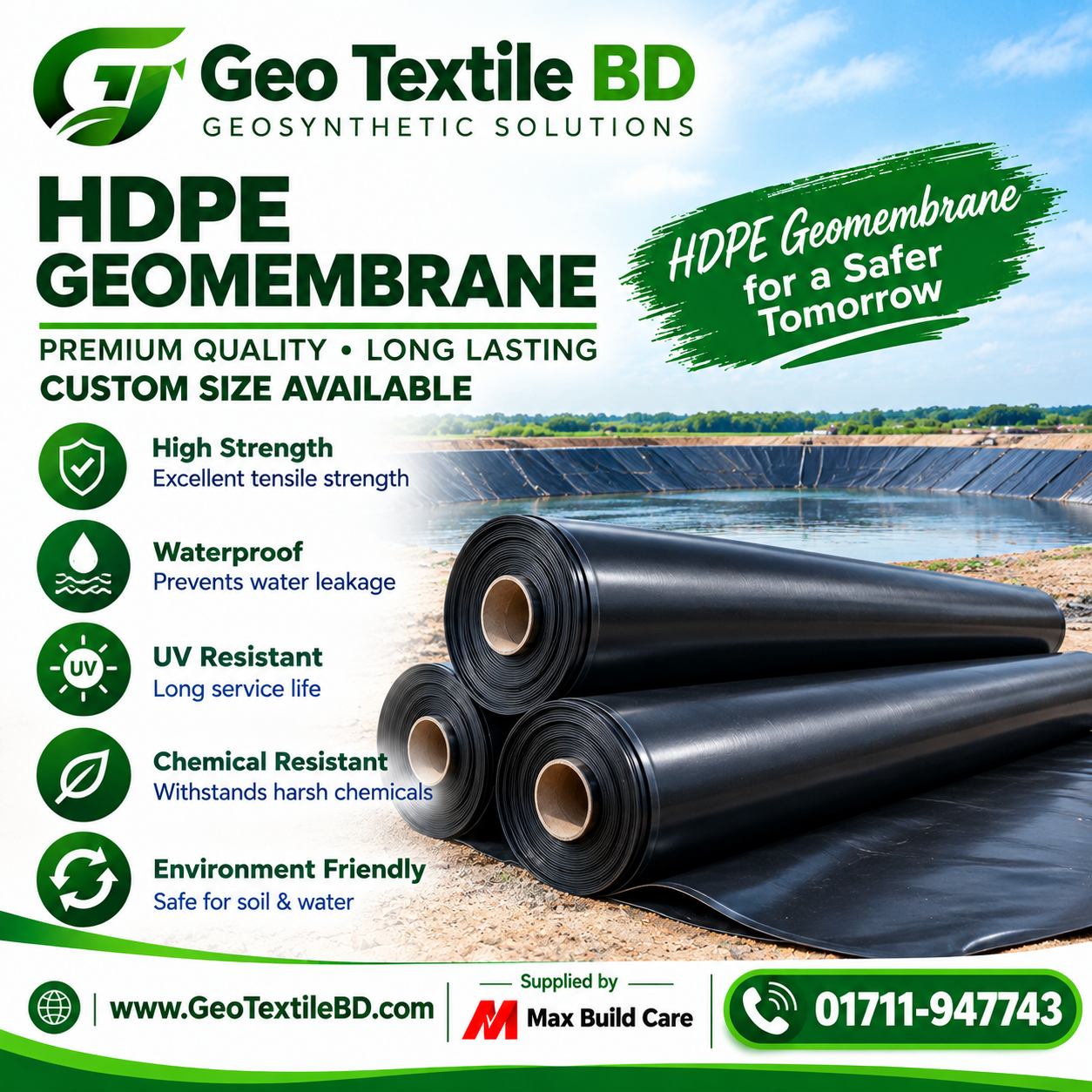
HDPE Geomembrane is a high-performance synthetic liner designed for waterproofing, liquid containment, and environmental protection. Manufactured from high-density polyethylene, it provides excellent resistance to chemicals, moisture, puncture, and environmental conditions. Ideal for ponds, reservoirs, landfills, wastewater treatment, irrigation, mining, and containment applications.
HDPE Geomembrane is a high-performance synthetic liner designed to provide reliable waterproofing, liquid containment, seepage control, and environmental protection in a wide range of civil engineering, agricultural, industrial, mining, and environmental applications. Manufactured from high-density polyethylene (HDPE), the geomembrane forms a continuous and highly impermeable barrier that helps prevent water, wastewater, chemicals, and other suitable liquids from penetrating into the surrounding soil.
Its excellent durability, low permeability, chemical resistance, and resistance to moisture make HDPE Geomembrane an important geosynthetic material for modern containment and waterproofing projects.
HDPE Geomembrane is a flexible synthetic membrane manufactured primarily from high-density polyethylene resin. It is supplied in large rolls and installed over prepared surfaces to create a low-permeability barrier.
The individual sheets are typically joined together using specialized thermal welding techniques to create continuous seams. Properly installed seams are essential for achieving effective long-term containment performance.
HDPE Geomembranes are available in different thicknesses and surface configurations depending on project requirements. The appropriate grade should be selected according to the application, substrate conditions, chemical exposure, expected loads, and design life.
HDPE Geomembrane provides a highly impermeable barrier that significantly reduces water and liquid seepage. This makes it suitable for water storage, wastewater containment, and environmental protection applications.
HDPE offers strong resistance to many chemicals and aggressive substances, making it suitable for selected industrial, mining, wastewater, and waste-containment applications.
The material is designed to withstand demanding environmental conditions when correctly specified and installed. It can provide long-term service in applications where moisture, soil contact, and outdoor exposure are present.
HDPE Geomembrane combines high tensile performance with flexibility, allowing it to conform to properly prepared surfaces and accommodate certain ground movements without losing its barrier function.
Once properly installed and protected, a geomembrane lining system generally requires limited routine maintenance compared with many conventional waterproofing methods.
HDPE Geomembrane is widely used for:
One of the most common applications of HDPE Geomembrane is lining ponds and reservoirs. Conventional soil-based ponds may experience water loss through seepage. Installing an HDPE liner creates a low-permeability barrier between the stored water and the underlying soil.
This can help conserve water and improve the efficiency of irrigation, aquaculture, rainwater harvesting, and other water-storage systems.
HDPE Geomembrane is also widely used in wastewater and environmental containment systems. It can be installed as a lining layer in suitable treatment ponds, sludge containment areas, landfill systems, and other engineered containment structures.
By reducing liquid migration into surrounding soil, the liner can help protect groundwater and adjacent land from contamination. For hazardous or chemically aggressive applications, compatibility between the specific geomembrane and the contained material should be professionally evaluated.
Proper surface preparation is critical for successful geomembrane installation. The substrate should be stable, smooth, and free from sharp stones, roots, debris, or other objects that could damage the membrane.
The geomembrane rolls are carefully deployed over the prepared surface with appropriate overlaps. Adjacent sheets are then joined using suitable thermal welding equipment.
Seams should be inspected and tested according to the project quality-control requirements. Damaged areas should be properly repaired before the liner is covered or placed into service.
Where required, a protective geotextile layer can be installed beneath or above the geomembrane to reduce the risk of puncture and mechanical damage.
The correct HDPE Geomembrane specification should be selected based on:
Common thicknesses vary by application, so the final specification should be determined according to project design and engineering requirements.
HDPE Geomembrane rolls should be stored on a clean, stable, and level surface and protected from unnecessary damage before installation. During transportation and deployment, the membrane should not be dragged over sharp surfaces or handled with equipment that may puncture or tear the material.
Careful handling and proper installation practices are essential for maintaining the integrity of the liner.
HDPE Geomembrane is a reliable and versatile geosynthetic lining solution for waterproofing, liquid containment, seepage control, and environmental protection. Its low permeability, durability, chemical resistance, and flexible construction make it suitable for water reservoirs, ponds, wastewater facilities, landfills, mining operations, irrigation systems, and numerous other containment applications.
When the correct specification is selected and the membrane is properly installed, welded, tested, and protected, HDPE Geomembrane can provide an effective long-term barrier against leakage and unwanted liquid migration.

HDPE Geomembrane is a high-performance synthetic liner designed for waterproofing, liquid containment, and environmental protection. Manufactured from high-density polyethylene, it provides excellent resistance to chemicals, moisture, puncture, and environmental conditions. Ideal for ponds, reservoirs, landfills, wastewater treatment, irrigation, mining, and containment applications.
HDPE Geomembrane is a high-performance synthetic liner designed to provide reliable waterproofing, liquid containment, seepage control, and environmental protection in a wide range of civil engineering, agricultural, industrial, mining, and environmental applications. Manufactured from high-density polyethylene (HDPE), the geomembrane forms a continuous and highly impermeable barrier that helps prevent water, wastewater, chemicals, and other suitable liquids from penetrating into the surrounding soil.
Its excellent durability, low permeability, chemical resistance, and resistance to moisture make HDPE Geomembrane an important geosynthetic material for modern containment and waterproofing projects.
HDPE Geomembrane is a flexible synthetic membrane manufactured primarily from high-density polyethylene resin. It is supplied in large rolls and installed over prepared surfaces to create a low-permeability barrier.
The individual sheets are typically joined together using specialized thermal welding techniques to create continuous seams. Properly installed seams are essential for achieving effective long-term containment performance.
HDPE Geomembranes are available in different thicknesses and surface configurations depending on project requirements. The appropriate grade should be selected according to the application, substrate conditions, chemical exposure, expected loads, and design life.
HDPE Geomembrane provides a highly impermeable barrier that significantly reduces water and liquid seepage. This makes it suitable for water storage, wastewater containment, and environmental protection applications.
HDPE offers strong resistance to many chemicals and aggressive substances, making it suitable for selected industrial, mining, wastewater, and waste-containment applications.
The material is designed to withstand demanding environmental conditions when correctly specified and installed. It can provide long-term service in applications where moisture, soil contact, and outdoor exposure are present.
HDPE Geomembrane combines high tensile performance with flexibility, allowing it to conform to properly prepared surfaces and accommodate certain ground movements without losing its barrier function.
Once properly installed and protected, a geomembrane lining system generally requires limited routine maintenance compared with many conventional waterproofing methods.
HDPE Geomembrane is widely used for:
One of the most common applications of HDPE Geomembrane is lining ponds and reservoirs. Conventional soil-based ponds may experience water loss through seepage. Installing an HDPE liner creates a low-permeability barrier between the stored water and the underlying soil.
This can help conserve water and improve the efficiency of irrigation, aquaculture, rainwater harvesting, and other water-storage systems.
HDPE Geomembrane is also widely used in wastewater and environmental containment systems. It can be installed as a lining layer in suitable treatment ponds, sludge containment areas, landfill systems, and other engineered containment structures.
By reducing liquid migration into surrounding soil, the liner can help protect groundwater and adjacent land from contamination. For hazardous or chemically aggressive applications, compatibility between the specific geomembrane and the contained material should be professionally evaluated.
Proper surface preparation is critical for successful geomembrane installation. The substrate should be stable, smooth, and free from sharp stones, roots, debris, or other objects that could damage the membrane.
The geomembrane rolls are carefully deployed over the prepared surface with appropriate overlaps. Adjacent sheets are then joined using suitable thermal welding equipment.
Seams should be inspected and tested according to the project quality-control requirements. Damaged areas should be properly repaired before the liner is covered or placed into service.
Where required, a protective geotextile layer can be installed beneath or above the geomembrane to reduce the risk of puncture and mechanical damage.
The correct HDPE Geomembrane specification should be selected based on:
Common thicknesses vary by application, so the final specification should be determined according to project design and engineering requirements.
HDPE Geomembrane rolls should be stored on a clean, stable, and level surface and protected from unnecessary damage before installation. During transportation and deployment, the membrane should not be dragged over sharp surfaces or handled with equipment that may puncture or tear the material.
Careful handling and proper installation practices are essential for maintaining the integrity of the liner.
HDPE Geomembrane is a reliable and versatile geosynthetic lining solution for waterproofing, liquid containment, seepage control, and environmental protection. Its low permeability, durability, chemical resistance, and flexible construction make it suitable for water reservoirs, ponds, wastewater facilities, landfills, mining operations, irrigation systems, and numerous other containment applications.
When the correct specification is selected and the membrane is properly installed, welded, tested, and protected, HDPE Geomembrane can provide an effective long-term barrier against leakage and unwanted liquid migration.
Lorem ipsum dolor sit amet, consectetur adipiscing elit. Ut elit tellus, luctus nec ullamcorper mattis, pulvinar dapibus leo.
Lorem ipsum dolor sit amet, consectetur adipiscing elit. Ut elit tellus, luctus nec ullamcorper mattis, pulvinar dapibus leo.
Lorem ipsum dolor sit amet, consectetur adipiscing elit. Ut elit tellus, luctus nec ullamcorper mattis, pulvinar dapibus leo.
Lorem ipsum dolor sit amet, consectetur adipiscing elit. Ut