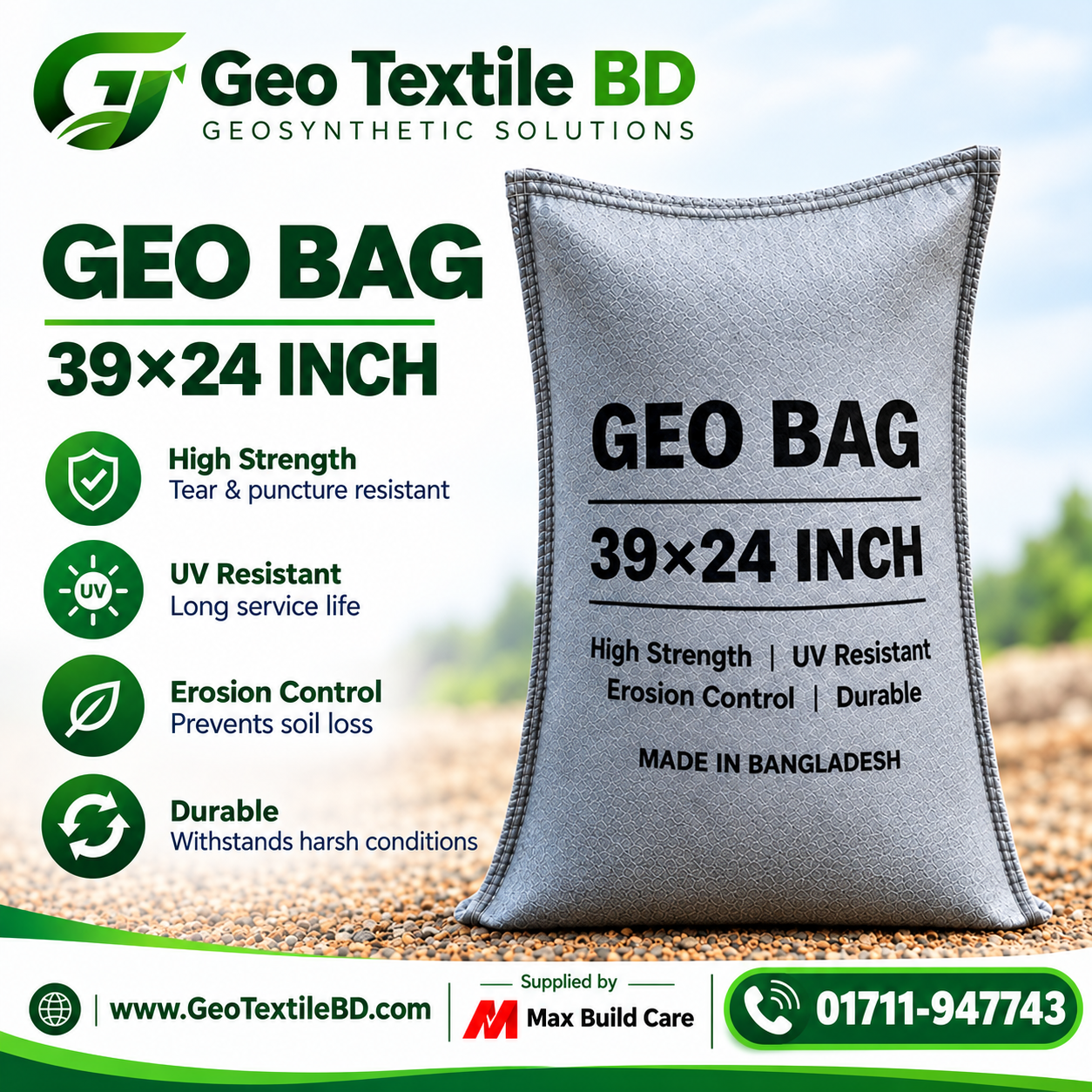
Geo Bag is a durable geotextile-based containment and erosion-control solution designed for riverbank protection, slope stabilization, drainage, coastal defense, and civil engineering applications. Manufactured from high-strength geotextile fabric, it provides reliable soil and sand containment while supporting long-term ground stability and erosion protection.
Geo Bag is a durable geotextile-based containment solution designed for erosion control, riverbank protection, slope stabilization, coastal protection, drainage works, and various civil engineering applications. Manufactured from high-strength geotextile fabric, Geo Bags are designed to contain suitable filling materials such as sand, soil, or other approved aggregates while providing a practical and cost-effective solution for protecting vulnerable areas against erosion and ground movement.
Geo Bags are particularly useful in areas where conventional concrete or rigid structures may be difficult, expensive, or unsuitable to install. Their flexible structure allows them to adapt to ground conditions while providing effective protection and stabilization.
A Geo Bag is a specially manufactured bag made from durable woven or non-woven geotextile fabric. The fabric is selected according to the required strength, permeability, durability, and application conditions.
The bag is filled with suitable material and then positioned at the required location. Once installed, the filled bag forms a stable protective unit that can be used individually or arranged in layers to create larger erosion-control and stabilization structures.
Depending on project requirements, Geo Bags can be supplied in different sizes, fabric specifications, shapes, and filling capacities.
Geo Bags are manufactured from strong synthetic geotextile materials designed to withstand handling, filling, installation, and environmental exposure. Properly selected bags can provide reliable long-term performance under demanding site conditions.
Geo Bags help protect soil and exposed surfaces from erosion caused by flowing water, wave action, rainfall, and surface runoff. They are particularly useful for riverbanks, canals, slopes, embankments, and coastal areas.
Unlike rigid concrete structures, filled Geo Bags can conform to irregular ground surfaces. This flexibility makes them suitable for projects where ground conditions or site geometry make conventional construction difficult.
Geo Bags are lightweight before filling and can be transported and positioned relatively easily. Their installation can be adapted according to site conditions and project requirements.
Geo Bags can provide an economical alternative for selected erosion-control and stabilization applications, particularly where large quantities of conventional construction materials would otherwise be required.
Geo Bags are commonly used for:
One of the major applications of Geo Bags is the protection of riverbanks and canal banks. Water flow can gradually remove soil from exposed banks, resulting in erosion, instability, and loss of land.
Filled Geo Bags can be placed strategically along vulnerable sections of the bank to create a protective layer. Depending on the engineering design, bags may be arranged individually, in rows, or in multiple layers.
Proper installation and foundation preparation are essential to ensure that the bags remain stable under expected hydraulic conditions.
Geo Bags can also be used to protect slopes and embankments from surface erosion caused by rainfall and water runoff. By covering vulnerable areas, they can help reduce soil loss and maintain the stability of the protected surface.
They may be combined with other geosynthetic materials, drainage systems, vegetation, or additional erosion-control measures according to the project design.
Before installation, the area should be properly prepared by removing loose debris, unstable soil, sharp objects, and other materials that may damage the fabric.
The Geo Bags are then filled with the specified material using an appropriate filling method. After filling, the bags should be securely positioned according to the approved layout.
For larger protection structures, proper overlapping, anchoring, foundation preparation, and placement sequence are important to minimize movement and maintain structural stability.
The installation method should always be determined according to site conditions, hydraulic forces, soil characteristics, and engineering requirements.
The appropriate Geo Bag should be selected based on:
For river, coastal, and heavy hydraulic applications, engineering assessment is recommended before selecting the final specification.
Geo Bags should be stored in a clean and dry location and protected from prolonged exposure to direct sunlight before installation. During transportation and handling, care should be taken to prevent cutting, puncturing, or tearing of the geotextile fabric.
Geo Bag is a versatile and practical geosynthetic solution for erosion control, riverbank protection, slope stabilization, embankment protection, drainage works, and coastal applications. Its strong yet flexible geotextile structure provides effective containment of filling materials while allowing the bags to adapt to different site conditions.
When properly selected, filled, installed, and maintained according to project requirements, Geo Bags can provide a reliable, economical, and durable solution for protecting soil and infrastructure from erosion and water-related damage.

Geo Bag is a durable geotextile-based containment and erosion-control solution designed for riverbank protection, slope stabilization, drainage, coastal defense, and civil engineering applications. Manufactured from high-strength geotextile fabric, it provides reliable soil and sand containment while supporting long-term ground stability and erosion protection.
Geo Bag is a durable geotextile-based containment solution designed for erosion control, riverbank protection, slope stabilization, coastal protection, drainage works, and various civil engineering applications. Manufactured from high-strength geotextile fabric, Geo Bags are designed to contain suitable filling materials such as sand, soil, or other approved aggregates while providing a practical and cost-effective solution for protecting vulnerable areas against erosion and ground movement.
Geo Bags are particularly useful in areas where conventional concrete or rigid structures may be difficult, expensive, or unsuitable to install. Their flexible structure allows them to adapt to ground conditions while providing effective protection and stabilization.
A Geo Bag is a specially manufactured bag made from durable woven or non-woven geotextile fabric. The fabric is selected according to the required strength, permeability, durability, and application conditions.
The bag is filled with suitable material and then positioned at the required location. Once installed, the filled bag forms a stable protective unit that can be used individually or arranged in layers to create larger erosion-control and stabilization structures.
Depending on project requirements, Geo Bags can be supplied in different sizes, fabric specifications, shapes, and filling capacities.
Geo Bags are manufactured from strong synthetic geotextile materials designed to withstand handling, filling, installation, and environmental exposure. Properly selected bags can provide reliable long-term performance under demanding site conditions.
Geo Bags help protect soil and exposed surfaces from erosion caused by flowing water, wave action, rainfall, and surface runoff. They are particularly useful for riverbanks, canals, slopes, embankments, and coastal areas.
Unlike rigid concrete structures, filled Geo Bags can conform to irregular ground surfaces. This flexibility makes them suitable for projects where ground conditions or site geometry make conventional construction difficult.
Geo Bags are lightweight before filling and can be transported and positioned relatively easily. Their installation can be adapted according to site conditions and project requirements.
Geo Bags can provide an economical alternative for selected erosion-control and stabilization applications, particularly where large quantities of conventional construction materials would otherwise be required.
Geo Bags are commonly used for:
One of the major applications of Geo Bags is the protection of riverbanks and canal banks. Water flow can gradually remove soil from exposed banks, resulting in erosion, instability, and loss of land.
Filled Geo Bags can be placed strategically along vulnerable sections of the bank to create a protective layer. Depending on the engineering design, bags may be arranged individually, in rows, or in multiple layers.
Proper installation and foundation preparation are essential to ensure that the bags remain stable under expected hydraulic conditions.
Geo Bags can also be used to protect slopes and embankments from surface erosion caused by rainfall and water runoff. By covering vulnerable areas, they can help reduce soil loss and maintain the stability of the protected surface.
They may be combined with other geosynthetic materials, drainage systems, vegetation, or additional erosion-control measures according to the project design.
Before installation, the area should be properly prepared by removing loose debris, unstable soil, sharp objects, and other materials that may damage the fabric.
The Geo Bags are then filled with the specified material using an appropriate filling method. After filling, the bags should be securely positioned according to the approved layout.
For larger protection structures, proper overlapping, anchoring, foundation preparation, and placement sequence are important to minimize movement and maintain structural stability.
The installation method should always be determined according to site conditions, hydraulic forces, soil characteristics, and engineering requirements.
The appropriate Geo Bag should be selected based on:
For river, coastal, and heavy hydraulic applications, engineering assessment is recommended before selecting the final specification.
Geo Bags should be stored in a clean and dry location and protected from prolonged exposure to direct sunlight before installation. During transportation and handling, care should be taken to prevent cutting, puncturing, or tearing of the geotextile fabric.
Geo Bag is a versatile and practical geosynthetic solution for erosion control, riverbank protection, slope stabilization, embankment protection, drainage works, and coastal applications. Its strong yet flexible geotextile structure provides effective containment of filling materials while allowing the bags to adapt to different site conditions.
When properly selected, filled, installed, and maintained according to project requirements, Geo Bags can provide a reliable, economical, and durable solution for protecting soil and infrastructure from erosion and water-related damage.
Lorem ipsum dolor sit amet, consectetur adipiscing elit. Ut elit tellus, luctus nec ullamcorper mattis, pulvinar dapibus leo.
Lorem ipsum dolor sit amet, consectetur adipiscing elit. Ut elit tellus, luctus nec ullamcorper mattis, pulvinar dapibus leo.
Lorem ipsum dolor sit amet, consectetur adipiscing elit. Ut elit tellus, luctus nec ullamcorper mattis, pulvinar dapibus leo.
Lorem ipsum dolor sit amet, consectetur adipiscing elit. Ut